
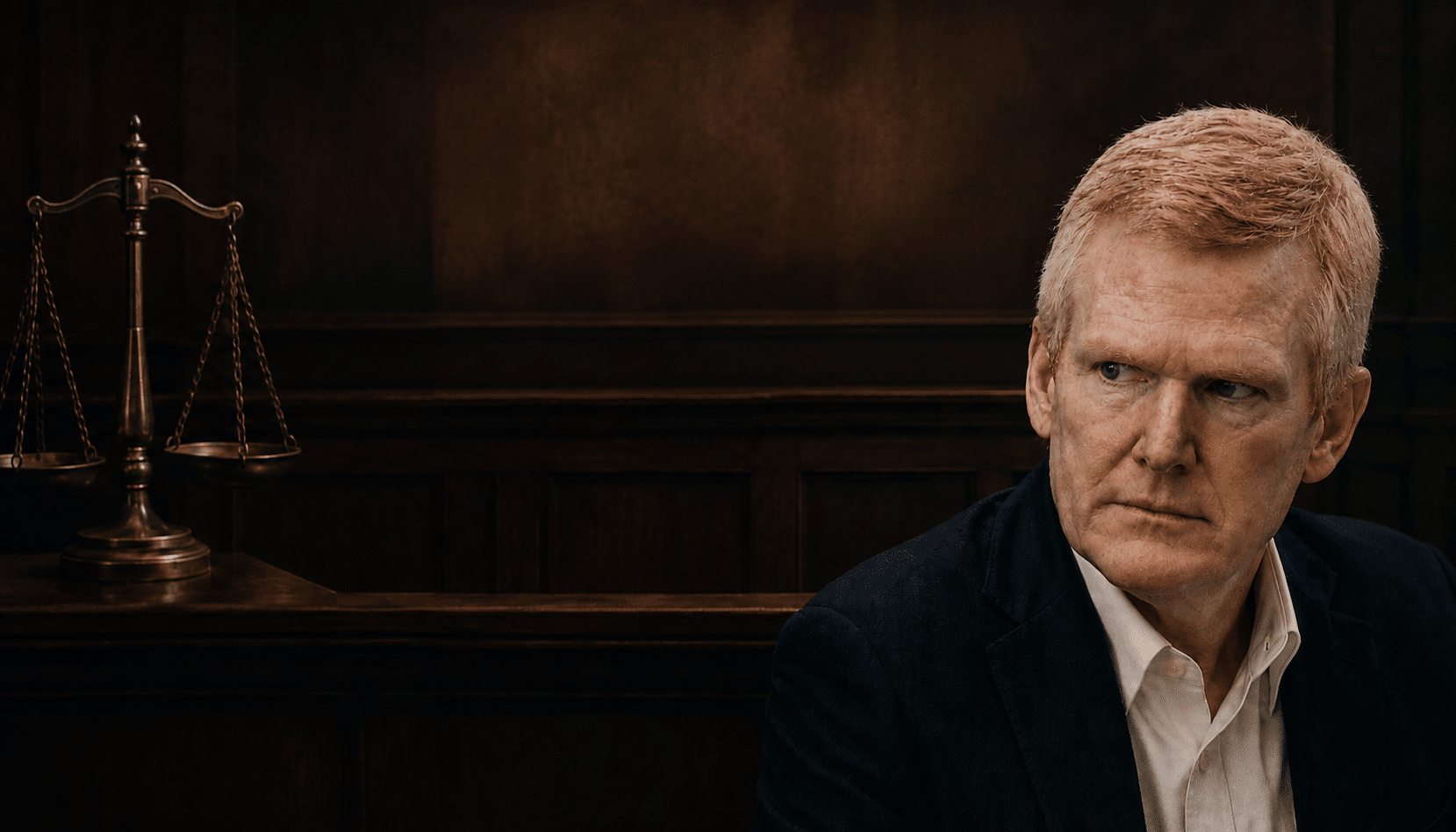
The Alex Murdaugh saga has been going on for a few years now, and a new chapter was released on Wednesday May 13, 2026, when the South Carolina Supreme Court reversed Murdaugh’s convictions for murdering his wife and son. Murdaugh’s trial lasted for six weeks—which means a lot of time, effort, and money invested on both sides—and all of it has been overturned.
Why? Because the Colleton County Clerk of Court Rebecca Hill decided to do what is not allowed: tampering with the jury.
How? Hill repeatedly commented on the trial, the testimony, and the evidence in front of the jurors—notably warning them to “not be fooled” by evidence presented by the defense and telling them that their decision shouldn’t take long. It also turned out that Hill wrote a behind-the-scenes book so she could buy a lake house and thought a guilty verdict would sell more books wanted. Hill also granted special favors to the media—which led to a perjury conviction after she lied about it.
When Hill’s jury tampering came to light after he was convicted, Murdaugh filed a motion for new trial raising the issue. A specially appointed judge, however, denied that motion after deciding that, while she had certainly made improper comments and that Hill’s denials lacked credibility, Hill’s actions had not affected the outcome based on the evidence presented. The South Carolina Supreme Court disagreed.
Among other protections such as the right to counsel, the Sixth Amendment affords every criminal defendant the right to trial “by an impartial jury.” In Remmer v. United States, 347 U.S. 227 (1954), the United States Supreme Court explained that
In a criminal case, any private communication, contact, or tampering directly or indirectly, with a juror during a trial about the matter pending before the jury is, for obvious reasons, deemed presumptively prejudicial, if not made in pursuance of known rules of the court and the instructions and directions of the court made during the trial, with full knowledge of the parties. The presumption is not conclusive, but the burden rests heavily upon the Government to establish, after notice to and hearing of the defendant, that such contact with the juror was harmless to the defendant.
That is why, in every jury trial, the judge presiding over the case tells jurors that they shouldn’t speak with people about the case or investigate the case on their own. The jury’s role is to consider the evidence presented at trial and only that evidence.
Generally, once a jury has reached a verdict, parties to a case cannot attempt to undermine the verdict by having a juror testify or provide an affidavit about what happened during deliberations. In Alabama, South Carolina, and federal court, this general rule is contained in Rule 606(b) of the Rules of Evidence. Rule 606(b), however, contains an exception that allows for a juror to “testify on the question of whether extraneous prejudicial information was improperly brought to the jury’s attention or whether any outside influence was improperly brought to bear upon any juror.” Put more simply, what happens in the room stays in the room. But when what happens in the room was influenced by things outside the room, then there is a problem.
But, obviously, not every interaction with a non-juror is problematic. If the bailiff lets the jurors know that it is raining outside or asks whether the temperature needs to be adjusted, that hardly has an effect on what the jury’s deliberations. Alabama, for example, requires a showing of actual or presumed prejudice. Meaning that the outside influence was critical in how the jury made its decision.
In Murdaugh’s case, the South Carolina Supreme Court held that once the defendant has met his initial burden of showing improper contact between the jury and an outside influence that was not trivial, then presumption is presumed and the State has the heavy burden of proving that there was “no reasonable possibility that the jury’s verdict was influenced by an improper communication.” Applying that test, the Court easily determined that Hill’s actions weren’t trivial. That shifted the burden to the State to overcome the presumption of prejudice—which was extremely difficult given the nature of Hill’s repeated interactions with the jury and motives in doing. The Court had little trouble in holding that the State failed to meet that burden and reversed Murdaugh’s convictions.
Generally speaking, these types of claims can be difficult to win because of the difficulty for the defendant to initially show outside influence. Here, however, “Hill’s shocking jury interference” was easily established. In a footnote commending the post-trial court that presided over the hearing on Hill’s actions, the South Carolina Supreme Court referred to Hill’s acts as “unprecedented jury interference.”
