
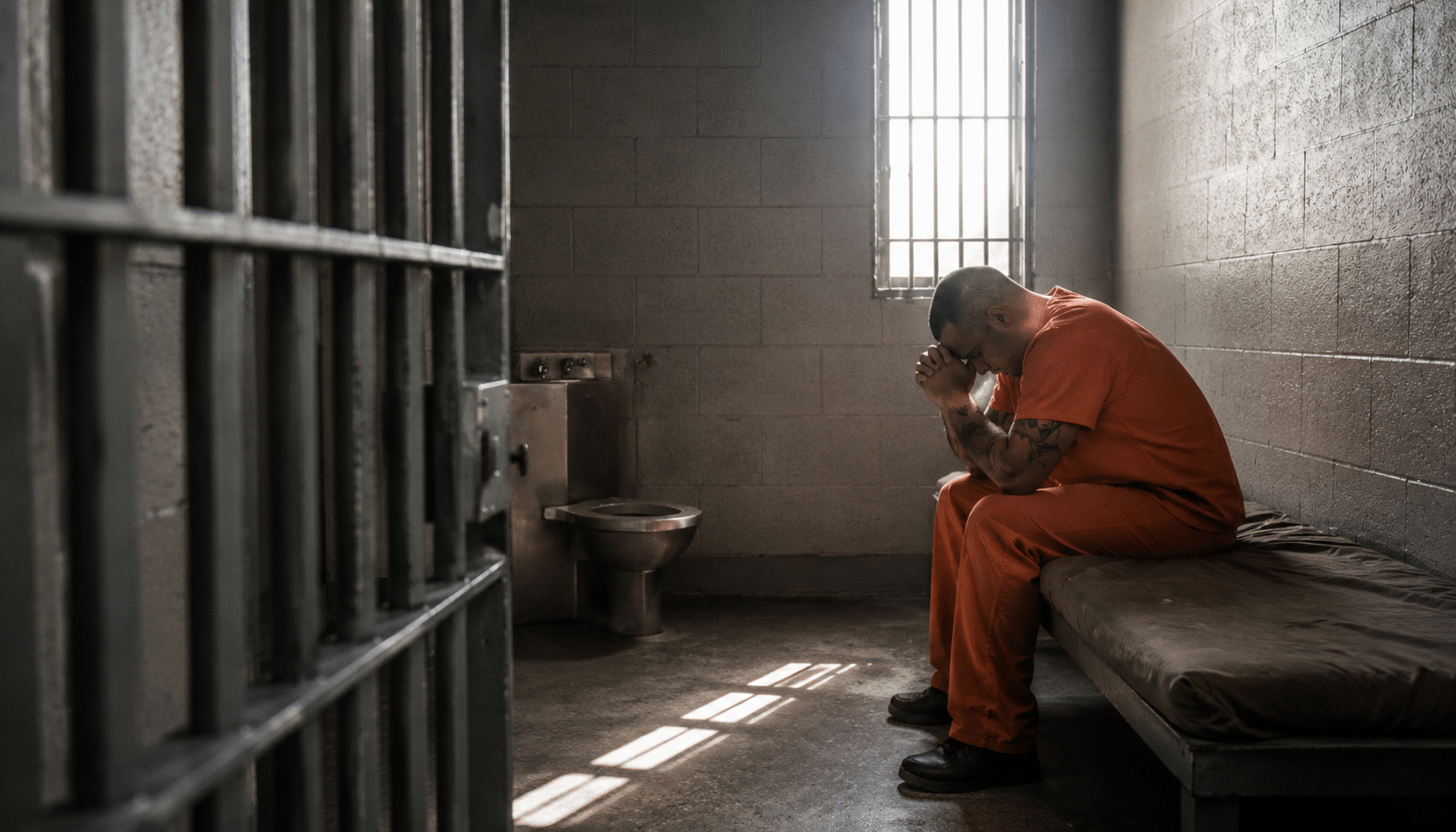
For several years litigation has been on-going regarding the conditions faced by inmates in various Alabama Department of Corrections facilities. A class action lawsuit was filed alleging that the Department of Corrections was in violation of the Eighth Amendment’s protection against cruel and unusual punishment through its deliberate indifference to the needs of the inmates in its custody. When the lawsuit was filed, Alabama operated 14 male prisons and 1 women’s prisons that collectively held 19,500 inmates—including approximately 3,400 of them receiving some level of mental health treatment. Due to the scope of the lawsuit, it was separated into three sections. Part of the lawsuit involved the Department of Corrections’s deliberate indifference to the mental health needs of inmates.
Emblematic of the problem is that between 2015 and 2015, the rate of suicide by inmates was mor than double the national average for all other state and federal prisons—including 15 suicides in a 15-month period. After years of on-going litigation in the federal Middle District of Alabama, the district court entered an order finding that the Department of Corrections had violated the Eighth Amendment and issued system-wide and permanent remedial injunctive relief. On June 24, 2026, the Eleventh Circuit upheld the vast majority of that order in Dunn v. Commissioner.
In its order, the district court found that the constitutional violations stemmed from seven major causes—not including the well-known chronic understaffing and overcrowding issues. Those causes were:
- Failing to identify prisoners with serious mentalhealth needs and to classify their needs properly;
- Failing to provide individualized treatment plans to prisoners with serious mental-health needs;
- Failing to provide psychotherapy by qualified and properly supervised mental-health staff and with adequate frequency and sound confidentiality;
- Providing insufficient out-of-cell time and treatment to those who need residential treatment; and failing to provide hospital-level care to those who need it;
- Failing to identify suicide risks adequately and providing inadequate treatment and monitoring to those who are suicidal, engaging in self-harm, or otherwise undergoing a mental-health crisis;
- Imposing disciplinary sanctions on mentally ill prisoners for symptoms of their mental illness, and imposing disciplinary sanctions without regard for the impact of sanctions on prisoners’ mental health; [and]
- Placing seriously mentally ill prisoners in segregation without extenuating circumstances and for prolonged periods of time; placing prisoners with serious mental-health needs in segregation without adequate consideration of the impact of segregation on mental health; and providing inadequate treatment and monitoring in segregation.
To correct these issues, the district court ordered the Department of Corrections to make several changes to how it treats and houses inmates with mental health issues.
The section of the order detailing the ordered changes was 375 pages long and extremely detailed. Naturally, the Department of Corrections appealed the order.
A large portion of the Eleventh Circuit’s opinion deals with jurisdictional issues; but, once the Court arrived at the merits, it wasted no time. As the Court noted, the district court’s analysis was exhaustive and comprehensive in showing “a prison system that failed as a whole to care for its inmates” and “the failures started ‘at the door.’” With that said, the Eleventh Circuit did find that the district court’s order overstepped in three ways.
First the district court overstepped by requiring that the Department of Corrections “suicide-proof” all of the housing units that are intended for inmates with mental-health issues. As the Court noted, this goes beyond what any prison system in the country has implemented because it applies to all housing units—not just housing units intended for potentially suicidal inmates. While the district court’s requirement might be the best practice, the Eighth Amendment does not require the best practice. Instead, it prohibits grossly incompetent practices that deny treatment.
Second, the district court overstepped in its requirements to address overstaffing. The district court’s order required the Department of Corrections to “fill all mandatory and essential posts at the level indicated in the most recent staffing analysis.” The problem with this provision is that it went beyond what was needed to address the mental health issues at issue in the order. Moreover, what qualifies as essential was also unclear.
Third, the district court overstepped in the requirements it made for the sole major women’s prison—Tutwiler. As the district court noted, Tutwiler was not facing the same level of issues as the men’s prisons and was subject to only part of the requirements for the men’s prisons. But, as the Eleventh Circuit noted, Tutwiler does not have the same systematic and frequent mental health issues that exist throughout the various male prisons. Tutwiler has not had an inmate suicide since 2004, and the sole inmate from Tutwiler who testified said that she had been receiving treatment for the past 13 years.
While the Eleventh Circuit held that the district court went too far in those specific areas, it broadly upheld the remainder of the order. These other provisions included:
- Not placing inmates with serious mental illness in restrictive housing without documented exceptional circumstances;
- Inmates in such house for 72 hours or longer must be offered at least 3 hours of out-of-cell time daily;
- Those in the units for “non-safety or non-security issues” can’t be held there for more than 72 hours; and
- All restrictive housing units were ordered to be cleaned within 3 months of the order’s effective date and then always cleaned before new occupants were placed in the unit.
Moreover, the Eleventh Circuit upheld that external monitoring aspects of the district court’s order. In doing so, it noted that the Department of Corrections had previously acknowledged that it was unable to ensure that it complied with the order. External monitoring was also appropriate given the repeated failures to comply with interim orders decided to make appropriate changes without direct intervention by the court.
While this decision certainly does not end the numerous and well-known failures and issues confronting inmates in the Alabama Department of Corrections, it is a step in the right direction.
